In development: not open to the public yet
One story, many angles.
Parallax gathers the articles that outlets from several European countries devote to the same event, shows how each one tells it, then opens a debate in good faith.
How it works
-
Gather
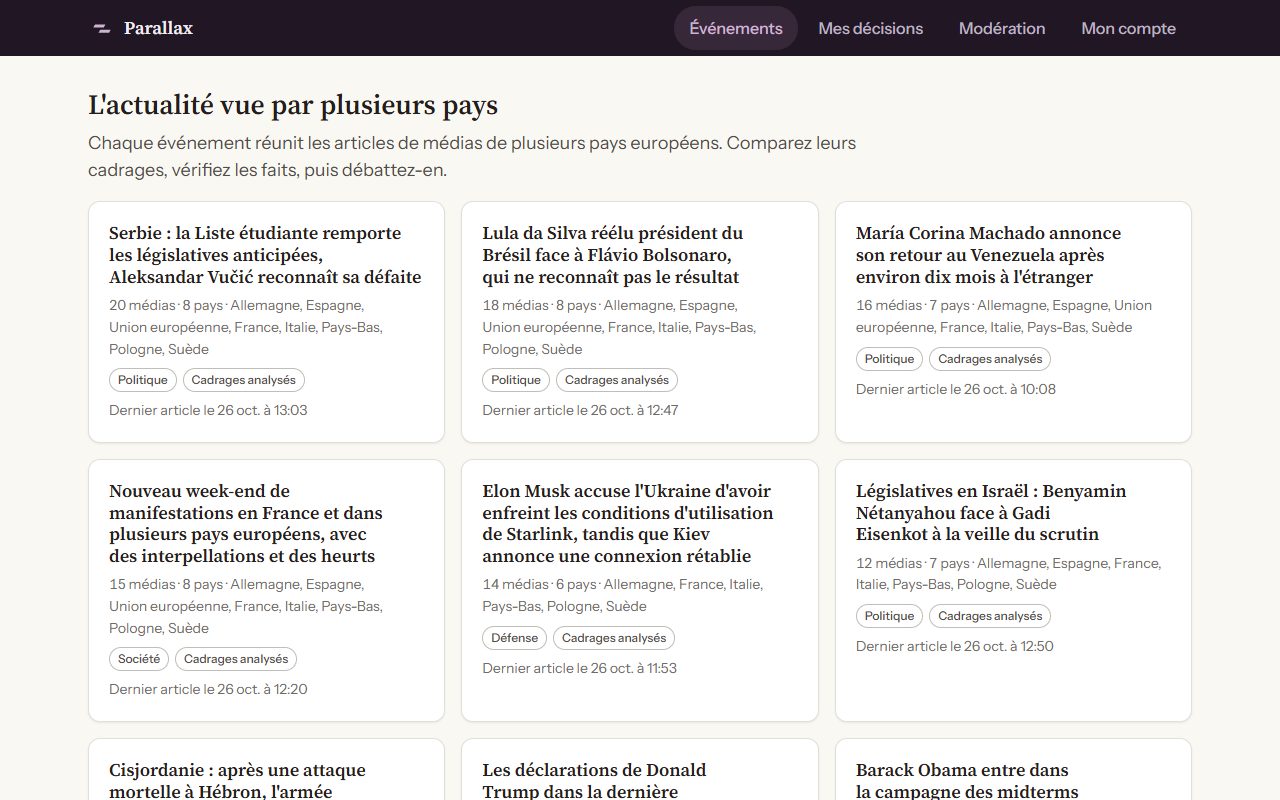
The panel's news feeds are read continuously. Articles that tell the same event are grouped, whatever their language.
-
Compare
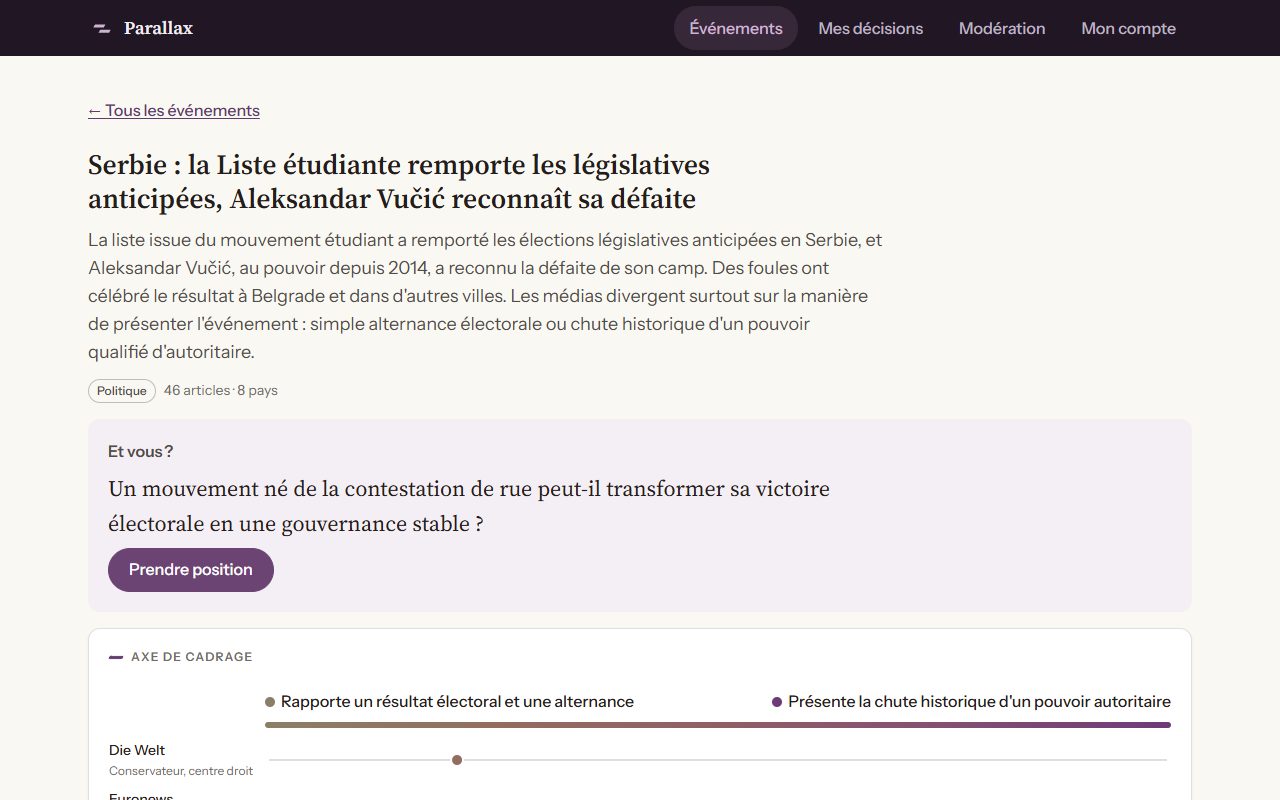
For each event, an analysis separates established, single-source, disputed and unknown facts, and places each article on an axis specific to the subject.
-
Debate
Everyone takes a position and argues. An argument rises when the other side finds it sound, and replying first means restating the argument you answer.
The panel today
- 25 outlets followed
- 7 countries
- 8 languages
- France
- France 24, Le Figaro, Le Monde, Libération
- Germany
- Der Spiegel, Die Welt, DW (English), FAZ, Tagesschau
- Italy
- ANSA, Corriere della Sera, la Repubblica
- Netherlands
- De Telegraaf, de Volkskrant, NOS
- Poland
- Gazeta Wyborcza, Rzeczpospolita, TVN24
- Spain
- ABC, El Mundo, El País
- Sweden
- Aftonbladet, SVT
- European Union
- Euronews, Politico Europe
These figures are read from the database when the page is displayed. The panel will grow.
The interface
Screenshots of the development version, on real data. Shown in French; the interface also speaks English and Dutch.
Our principles
No machine verdict on an outlet
The analysis describes how each article frames a given subject. It never rates an outlet's impartiality: its editorial line is recalled as it is commonly described, with its source. Only members can contest an article, with a source, and a contestation counts only when members from both sides judge it founded.
No removal for “false information”
The AI removes on its own only praise for terrorism and content sexualising minors. Hate, threats and personal data are suspended until a moderator decides; the rest stays visible while they review it.
Reasoned decisions
Every moderation decision gives its reason to the message's author, who can appeal it for 180 days.
Your data, kept to a minimum
Your address is never shown: others see your pseudonym. You can download your data or delete your account at any time. No advertising, no audience tracking.
Frequently asked questions
How are the outlets chosen?
Who writes the analyses?
Does Parallax say what is true?
What happens to a reported message?
What about my privacy?
Let’s work together
Newsrooms, researchers, funders or European partners: Parallax is being built with those who want a healthier public debate. Write to us.